
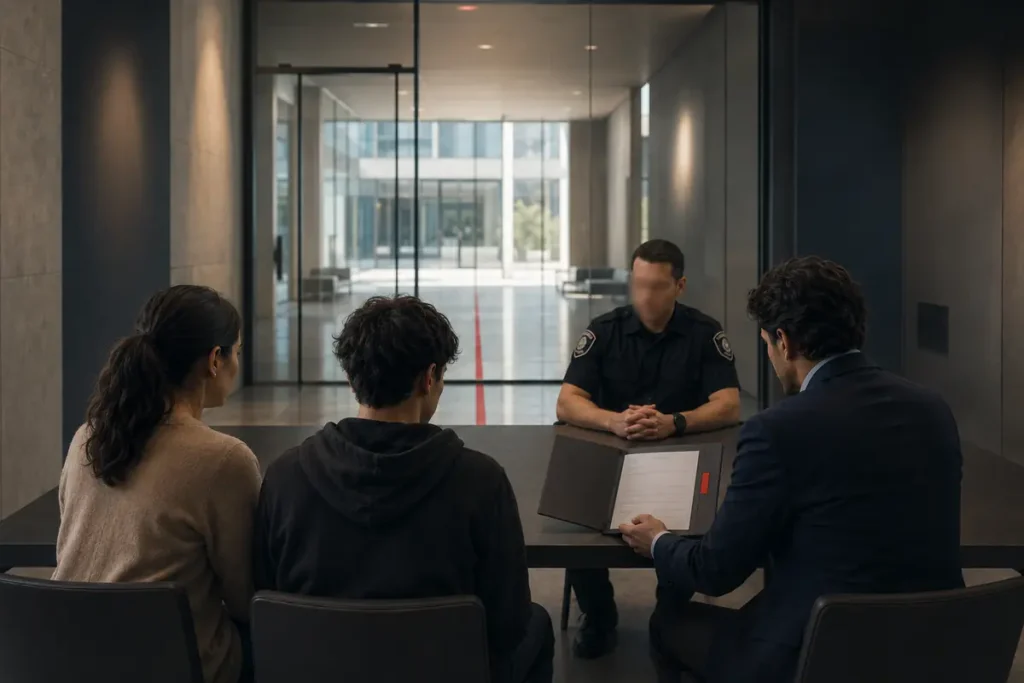
When a minor is charged with a crime in Ontario, the process can feel overwhelming for the young person and their family. Parents may be worried about the police station, a first court date, release conditions, school issues, detention, and whether the case will create a criminal record.
What happens when a minor is charged with a crime? In Canada, youth cases are handled differently from adult cases. A young person who was at least 12 years old but under 18 at the time of the alleged offence is usually dealt with under the Youth Criminal Justice Act, often called the YCJA. This law recognizes that young people are still developing and should be held accountable in a way that also supports rehabilitation, privacy, and reintegration.
That does not mean youth charges are minor. A youth criminal case can still involve strict conditions, court appearances, probation, community service, a youth sentence, or custody in serious cases. The early steps matter because a statement, missed court date, breach, or poorly understood resolution can affect the outcome.
Kahlon Law helps youth and families in Toronto, Brampton, Mississauga, and across the GTA understand the criminal process and make informed decisions. The firm’s approach is direct and practical: protect the young person’s rights, review the evidence, explain each stage clearly, and work toward an outcome that limits long-term harm.
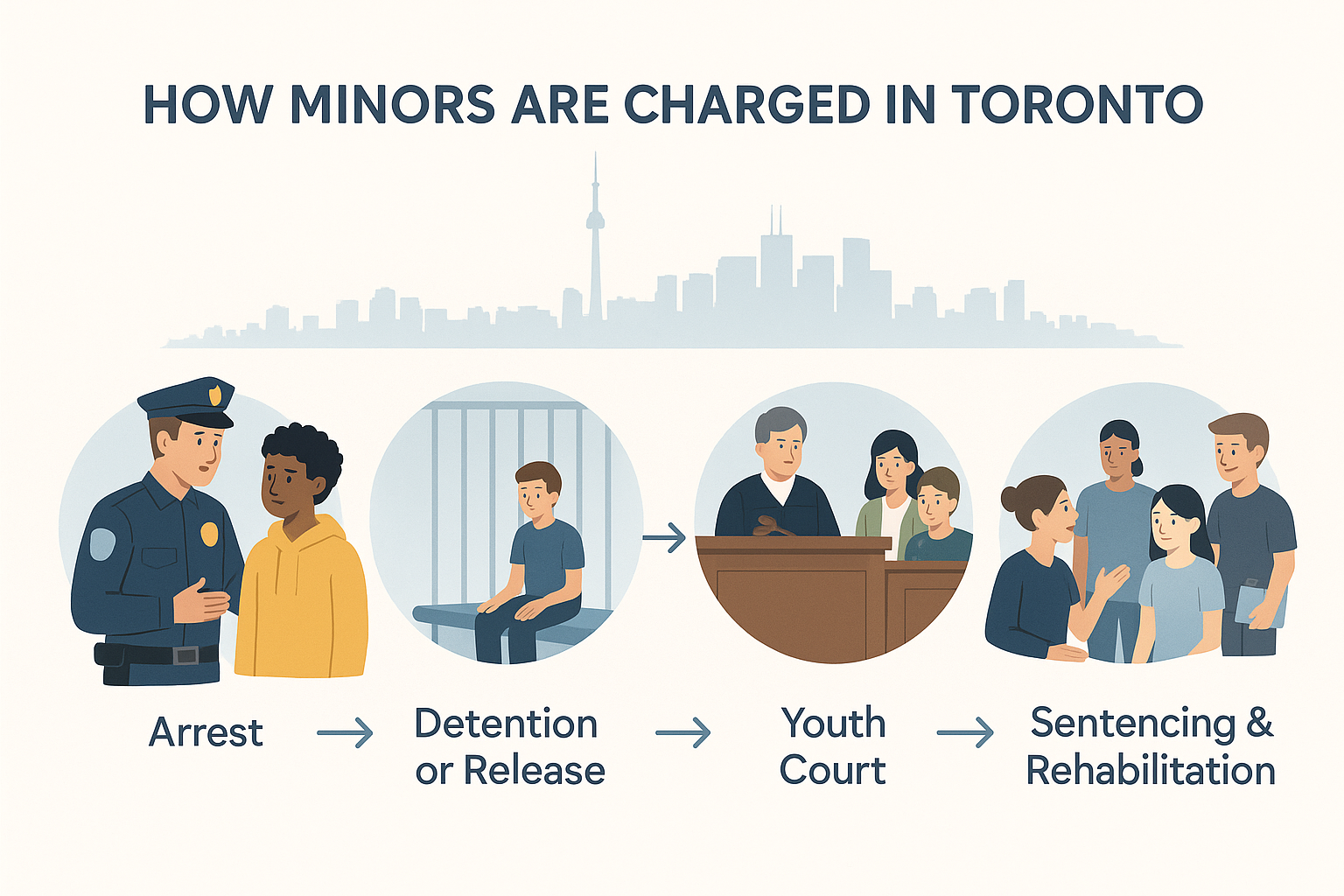
How Police Handle Youth Charges in Ontario
The process often starts with a police investigation. Police may speak with witnesses, review video, collect messages, speak with a complainant, or contact the young person directly. In some cases, the youth may be arrested. In others, police may call the family, ask the youth to attend a police station, or issue paperwork requiring a court appearance.
A young person has many of the same rights as an adult, including the right to remain silent and the right to speak with a lawyer. The difference is that youth also receive added protections because of their age. Police must take care to ensure the young person understands their rights. Parents or guardians are often notified and may be involved, depending on the situation.
A youth should not answer questions about the alleged offence without legal advice. Even if the young person wants to explain, apologize, or clear things up, a statement can be used in court. Parents should also avoid encouraging their child to “just tell the police what happened” before speaking with a lawyer.
After police contact, several outcomes are possible. Police may decide not to lay charges. They may issue a warning or caution. They may refer the young person to a community program. They may release the youth with conditions and a court date. In more serious cases, they may hold the youth for a bail hearing.
Important first steps for families include:
- keep every police and court document in one place
- write down what happened during police contact while details are fresh
- do not contact the complainant, witnesses, or co-accused if there is any restriction
- make sure the youth follows all release conditions
- speak with a youth criminal lawyer before the young person gives any statement
- save messages, videos, screenshots, or other evidence that may help the defence
For less serious matters, extrajudicial measures may be available. These can include warnings, cautions, referrals, counselling, apology letters, restitution, or community service. Extrajudicial measures are meant to hold the youth accountable without sending every case through a full youth justice court process.
Kahlon Law assists families from the first police contact. Early legal advice can help protect the young person’s right to silence, reduce confusion, and prevent avoidable mistakes before the case reaches court.
What Happens in Youth Justice Court When Young Offenders Are Charged
If charges are laid, the case usually moves to youth court, which is sometimes called juvenile court. This court is different from adult criminal court because it follows the YCJA and focuses on age-appropriate accountability.
The first court appearance is usually not a trial. The judge does not normally hear witnesses or decide guilt that day. The purpose is often to confirm the charge, address disclosure, check whether the youth has a lawyer, and schedule the next step.
Disclosure is the evidence the Crown may rely on. It can include police notes, witness statements, videos, photos, text messages, 911 calls, social media content, or other records. A lawyer reviews disclosure to see whether the Crown can prove the charge and whether the youth’s rights were respected.
A youth may be released by police before court, or the case may begin with a bail hearing. In a bail hearing, the court decides whether the youth may return home while the case continues. The court may consider the seriousness of the charge, public safety, whether the youth will attend court, and whether a parent or responsible adult can supervise.
If the youth may be released, conditions can be imposed. These may include a curfew, no contact with certain people, staying away from a school or location, attending school, living at a specific address, or following a parent’s rules. If a condition is unrealistic or interferes with school, work, or family responsibilities, a lawyer may be able to seek a change.
The table below explains common stages in the youth court process.
| Stage | What Usually Happens | Why It Matters |
|---|---|---|
| Police contact or arrest | Police investigate, speak with the youth, release them, or hold them for bail | Early decisions can affect the case and any statement may become evidence |
| First appearance | The court confirms the charge, disclosure, representation, and next date | Families learn the next step and whether the case may resolve or continue |
| Disclosure review | The defence lawyer studies the Crown’s evidence | Helps identify weaknesses, rights breaches, and possible defence strategies |
| Crown discussions | The lawyer may discuss withdrawal, diversion, resolution, or trial | May lead to a better outcome without unnecessary court delay |
| Trial or sentencing | The case is contested at trial or proceeds to a youth sentence after a finding of guilt | The outcome may affect records, conditions, custody, and future opportunities |
Judges deal with youth matters differently than adult matters. A judge may consider the youth’s age, maturity, family support, school attendance, prior history, and willingness to participate in counselling or programming. The court still takes the offence seriously, especially in cases involving assault, weapons, threats, robbery, drugs, or breaches. However, the youth justice system gives the court options designed to support rehabilitation where appropriate.
A parent or guardian should usually attend court with the young person. Their presence can help the court understand the support available at home. Parents may also help the youth comply with release conditions, attend counselling, complete community service, or stay away from people or places connected to the charge.
Possible Outcomes, Records, and Sentencing for a Minor
The result of a youth case depends on the charge, the evidence, the young person’s history, the harm caused, and the steps taken after the incident. Some cases are withdrawn. Some are resolved through extrajudicial measures. Some proceed to trial. Others result in a guilty plea or finding of guilt followed by sentencing.
For first-time or less serious cases, the Crown may consider alternatives to a formal finding of guilt. Extrajudicial measures or sanctions can allow a youth to take responsibility through counselling, restitution, an apology, education programs, or community work. These options can reduce long-term record exposure when completed properly.
If the case proceeds and the youth is found guilty, the court may impose a youth sentence. Possible sentences include a reprimand, discharge, fine, restitution, community service, probation, counselling, supervision, or custody in more serious cases. Jail for youth is usually referred to as custody or detention in a youth facility, and it is generally reserved for more serious circumstances.
A youth record is not the same as an adult criminal record, but it can still matter. It may be accessible to police, courts, Crown prosecutors, correctional officials, or other authorized agencies for a set period. If the youth is charged again while the record is open, the earlier matter may affect bail, sentencing, or access to diversion. If an adult conviction happens while a youth record is still open, the consequences can become more serious.
Families should not assume that a youth record disappears automatically at 18. Access periods depend on the outcome, sentence, offence, and later history. This is one reason legal advice is so important before a youth enters a guilty plea or accepts a resolution.
Kahlon Law reviews the evidence, explains the risks, and works to protect the youth’s future. That may mean seeking withdrawal, diversion, a reduction of charges, a tailored sentence, or trial where the Crown cannot prove the case.
Protecting Your Child’s Rights during the Criminal Process
When your child is charged, the family may feel pressure to act quickly. Quick decisions can create problems if they are made without understanding the law. Before speaking to police, contacting the complainant, agreeing to conditions, or discussing a plea, the youth and parents should understand the legal consequences.
A youth has the right to remain silent, the right to speak with a lawyer, the right to understand the charge, the right to disclosure, and the right to a fair trial. The youth also has privacy protections that usually prevent their name from being published. These protections are meant to prevent one allegation from causing unnecessary damage to education, employment, and community life.
A defence lawyer can help by reviewing whether police followed the YCJA, whether the youth understood their rights, whether any statement should be challenged, and whether the Crown’s evidence is strong enough to proceed. A lawyer can also negotiate with the Crown, prepare a bail plan, request changes to conditions, and help the family understand possible outcomes.
Parents can support the youth by staying calm, keeping records organized, making sure court dates are not missed, and encouraging the young person to follow all conditions. They should avoid discussing the facts of the case with witnesses, school staff, or other families unless a lawyer has advised them to do so.
This is also the stage where the family can begin building a positive plan. School attendance, counselling, structured routines, employment, mentorship, and family supervision may all help the young person personally and may also assist with bail or resolution discussions.
Why Early Legal Advice Matters for Youth Charges
Early legal advice can affect the direction of the entire case. A lawyer can step in before the youth gives a statement, before conditions are breached, before disclosure is misunderstood, and before the family agrees to a resolution that may not be in the young person’s best interests.
Kahlon Law’s youth offences practice focuses on the fact that young people are treated differently from adults under the YCJA. The firm understands that youth charges can affect school, family stress, mental health, privacy, records, and future plans. Kahlon Law also emphasizes direct lawyer access and tailored defence strategies, so families can speak with a lawyer who understands the file and the local court process.
In some cases, the best path is to negotiate an outcome that avoids a finding of guilt. In others, the evidence may be weak and the case should be challenged. In serious cases, careful preparation may be needed for bail, trial, or sentencing. The right strategy depends on the facts, not a one-size-fits-all approach.
A youth charge does not have to define a young person’s future. With timely guidance, families can make informed choices and protect the rights, privacy, and opportunities that matter most.
Speak with Kahlon Law if Your Child Has Been Charged
If your child has been contacted by police, arrested, released on conditions, or given a youth court date, speak with a criminal defence lawyer as soon as possible. Early advice can help protect the right to silence, reduce record risk, and create a clear plan for the next step.
Kahlon Law represents youth and families in Toronto, Brampton, Mississauga, and across the GTA. The firm provides practical guidance, direct communication, and defence strategies built around the specific circumstances of each case.
For confidential advice about your child’s case, contact Kahlon Law to speak directly with a youth criminal defence lawyer. Early legal support can help your family move forward with clarity and a stronger defence plan.