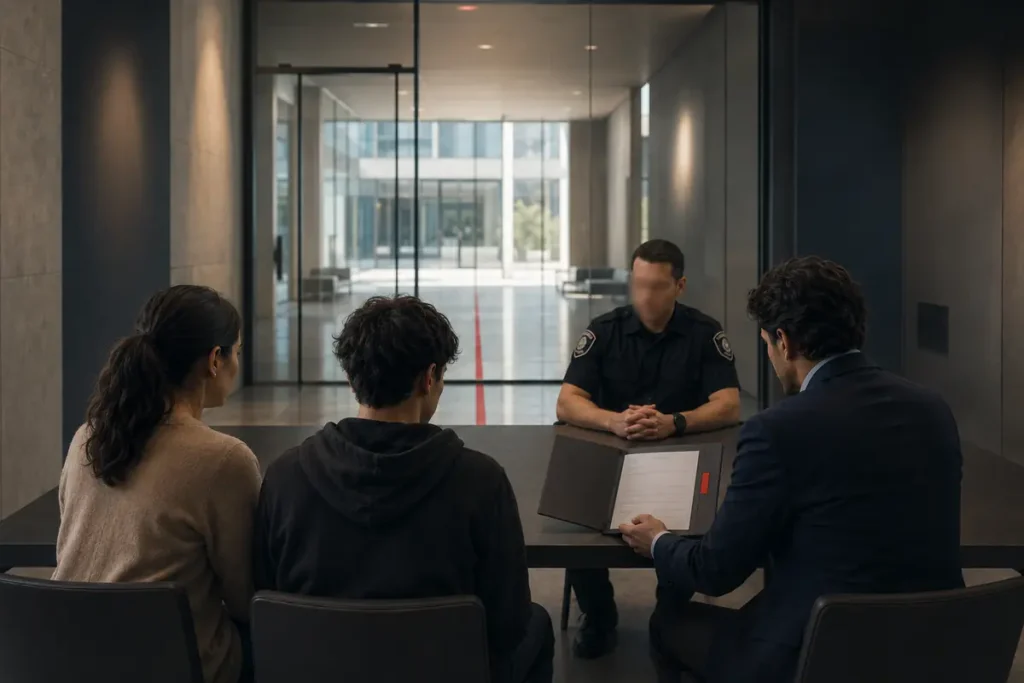

When a young person is charged with an offence, parents often worry about the same question right away: can a minor get a criminal record in Canada? The answer is yes, but it is not the same as an adult record.
A youth record can be created when a person who was at least 12 years old but under 18 at the time of the alleged offence becomes involved in the youth criminal justice system. That record may include police information, court documents, findings of guilt, sentence details, and other youth information connected to the case.
Canadian law treats youth records differently because young people are still developing. The Youth Criminal Justice Act, often called the YCJA, focuses on accountability, rehabilitation, privacy, and reintegration. The goal is not to ignore youth offences. It is to respond in a way that protects public safety while giving the young person a fair chance to move forward.
Still, a youth record should be taken seriously. It may affect school, employment, volunteering, travel, immigration, and future court outcomes during the access period. Kahlon Law helps youth and families in Toronto and the GTA understand what the record means, how long it may last, who may see it, and what defence options may reduce long-term harm.
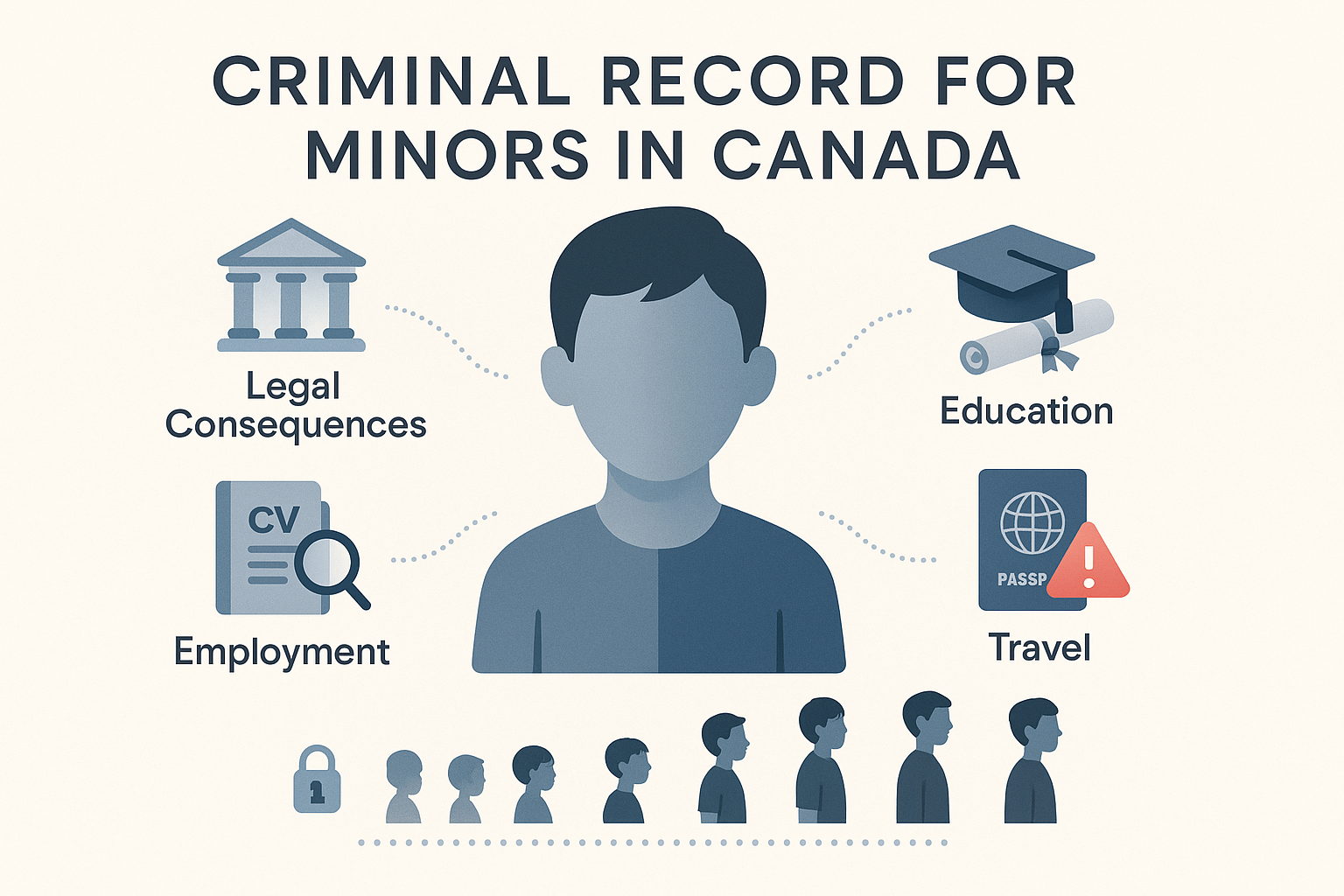
Alt text: Educational infographic illustrating what a criminal record means for minors in Canada, showing legal, school, travel, and employment impacts around a young person, plus a timeline demonstrating possible record sealing as they grow older.
paragraph
What a Youth Record Means under Canadian Law
A youth record is not the same as an adult criminal record. Adult criminal records are generally more public, longer-lasting, and harder to remove from a person’s life. Youth records are subject to stronger privacy rules and access limits.
A youth record may start when police lay a charge, even before the case is finished. It can include information held by police, the Crown, the court, correctional authorities, or youth justice agencies. If the young person is found guilty, the record may also include the youth sentence and any orders made by the court.
The law does not use youth records to permanently label every young person who makes a mistake. Instead, the YCJA creates access periods. During an access period, certain people and agencies may be able to see the record for allowed purposes. Once the access period ends, the record is usually sealed, destroyed, or no longer available to most parties, unless another event keeps it open.
This distinction matters for families. A youth record may not follow a child forever, but it can still create problems while it is open. It may appear in certain police checks, affect future youth court decisions, or become relevant if the young person is charged again before the access period expires.
Parents should avoid assuming that the record will automatically disappear at age 18. The age of the young person is only one part of the analysis. The outcome, sentence, offence, timing, and any later charges can affect how long the record remains accessible.
Kahlon Law helps families understand these details early, before decisions are made about statements, pleas, diversion, or sentencing.
When a Minor May Receive a Criminal Record
A minor can receive a youth record when they are charged with a criminal offence and the matter enters the formal justice process. Not every police interaction creates the same type of record, and not every allegation leads to a finding of guilt.
The outcome often depends on the offence, the evidence, the young person’s prior history, and whether the case can be handled outside the formal court process. Less serious allegations may be addressed through warnings, cautions, referrals, extrajudicial measures, or extrajudicial sanctions. More serious allegations are more likely to proceed through court.
Examples of youth offences that may lead to a record include:
- theft, shoplifting, robbery, break and enter, or fraud
- assault, threats, harassment, or weapons allegations
- mischief, vandalism, property damage, or arson-related allegations
- drug possession, trafficking, or distribution allegations
- breach of release conditions, probation, or court orders
- online offences, intimate image allegations, or cyber-related misconduct
A child under 12 cannot be charged under the YCJA. Other systems may respond, such as parents, schools, child protection services, or community agencies, but the child will not receive a youth criminal charge under that legislation.
For youth aged 12 to 17, the issue is not only whether a charge exists. The real question is what can be done about it. A defence lawyer may be able to challenge the evidence, negotiate with the Crown, pursue diversion, seek withdrawal, or argue for a sentence that reduces record consequences.
Kahlon Law emphasizes early action because choices made near the start of a case can affect whether a record is created, how the case is resolved, and how much future risk remains.
Extrajudicial Sanctions and Avoiding Long-Term Record Harm
Extrajudicial sanctions can be an important option for a young person facing a less serious first-time offence. These sanctions are part of the youth justice system and are meant to hold the youth accountable without pushing every case through a full court process.
They may require the young person to accept responsibility and complete certain steps. Those steps may include community service, restitution, counselling, an apology letter, a workshop, or another program connected to the behaviour.
Extrajudicial sanctions are not the same as being found guilty after trial or entering a guilty plea in court. They may still create temporary administrative records, but successful completion can help avoid the heavier consequences of a formal youth sentence.
| Option | What It May Involve | Record Impact |
|---|---|---|
| Police warning or caution | Police address the conduct without sending the case through court | May avoid formal court involvement |
| Referral to a community program | The youth attends counselling, education, or support services | May reduce future justice involvement |
| Extrajudicial sanctions | Apology, restitution, community service, counselling, or similar terms | Can avoid a formal finding of guilt if completed |
| Court resolution | Guilty plea, trial, withdrawal, or negotiated outcome | Record impact depends on the result |
| Youth sentence | Probation, community service, restitution, custody, or other orders | Creates a record with an access period |
These options are not automatic. The Crown may consider the seriousness of the offence, the youth’s history, the victim’s views, public safety, and whether the young person is willing to participate. A lawyer can help present the case in a way that supports diversion where appropriate.
Families should not accept any option without understanding the legal effect. In some cases, diversion is a good path. In others, the Crown’s case may be weak, the youth may deny the allegation, or the terms may create problems. Kahlon Law reviews disclosure and explains the risks before advising on the best route.
How Long Youth Records Last and Who Can Access Them
Youth records do not usually remain open forever. The access period depends on the outcome of the case. For example, a withdrawn charge, acquittal, reprimand, discharge, extrajudicial sanction, probation order, or custody sentence can each have different record consequences.
During the access period, youth records may be available to specific people or organizations, including police, courts, Crown prosecutors, correctional officials, and certain youth justice agencies. Access may also be allowed in limited situations involving background checks, vulnerable sector screening, or later criminal justice matters.
The general public does not have open access to youth records in the same way they may access some adult court information. Schools and employers also face limits. However, misunderstandings can happen, and certain checks may still create concerns while the record is open.
This is why families often ask whether a youth record will show up on a criminal record check. The answer depends on the type of check, the status of the record, the access period, the purpose of the check, and the agency conducting it. A standard employment check may be different from a vulnerable sector check or a police record check connected to a specific legal purpose.
If a youth commits another offence while the record is still open, the access period may be extended. If the young person later receives an adult conviction while the youth record remains open, the youth record may be treated more seriously and become part of the adult record framework in certain circumstances.
Kahlon Law helps families understand what information may exist, how it may be accessed, and what steps can reduce future problems.
How a Youth Record Can Affect School, Work, Travel, and the Future
A youth record is private in many ways, but it can still affect real life. Parents often worry about university applications, co-op placements, part-time jobs, professional licensing, sports travel, scholarships, volunteering, and crossing the border.
Some education programs or placements may require background checks, especially where the young person works with children, older adults, patients, or other vulnerable people. Employment can also be affected if a role involves trust, security, financial responsibility, driving, or vulnerable sector screening.
Travel can be more complicated. Canadian youth record protections may not control how foreign border officials treat past police or court involvement. A record or admission related to a criminal offence may lead to delays or questions when entering another country.
A youth record can also affect future court decisions. If the young person is charged again while the record is open, the earlier matter may be considered when the court looks at bail, sentencing, compliance, or available diversion options.
The best way to reduce these risks is to act early. That may include protecting the right to silence, avoiding contact with complainants or witnesses, following release conditions, preserving helpful evidence, and getting legal advice before agreeing to any resolution.
Kahlon Law builds defence strategies around both the immediate charge and the long-term impact. For a young person, the court outcome is only part of the picture. The broader goal is protecting education, privacy, family stability, and future opportunities.
Speak with Kahlon Law about Youth Criminal Records
A minor can get a youth record in Canada, but the effect of that record depends on the offence, the outcome, the sentence, the access period, and whether the young person has further contact with the justice system. The earlier a family gets legal advice, the more options may be available to protect the young person’s future.
Kahlon Law represents youth and families in Toronto, Mississauga, Brampton, and across the GTA. The firm provides direct lawyer access, practical advice, and defence strategies tailored to the facts of each case. If your child has been contacted by police, charged, released on conditions, or given a court date, speak with a youth criminal defence lawyer before making decisions that could affect the record.