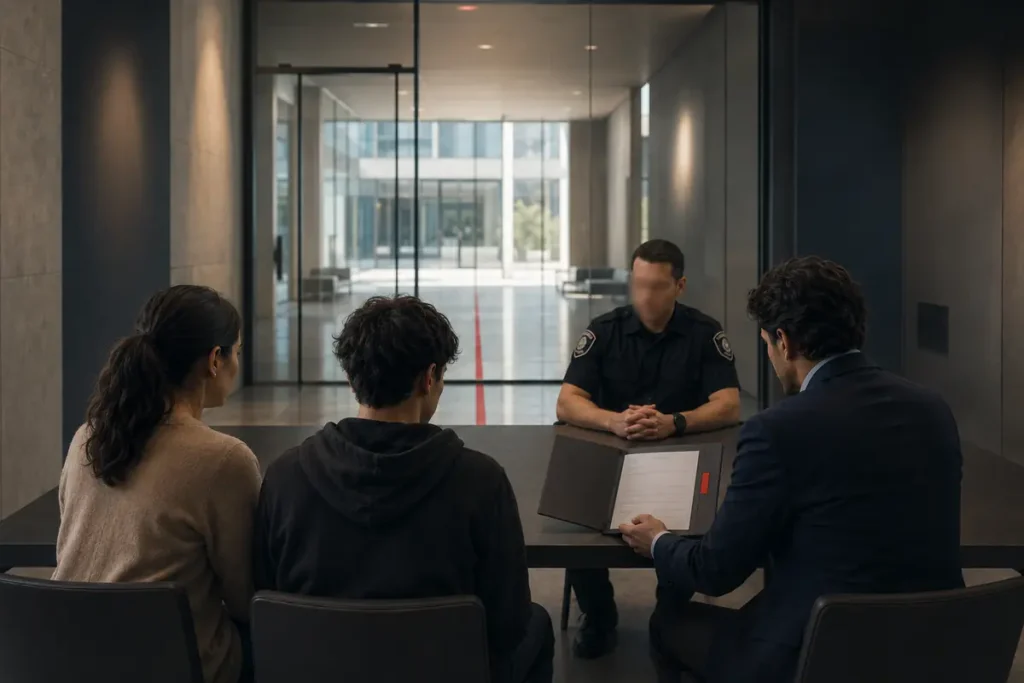

A youth court hearing can feel stressful for a young person and their family, especially when it is the first time dealing with police, court dates, release conditions, or a criminal allegation. Parents often want to know what happens at a youth court hearing, who will speak in court, whether their child has to say anything, whether the matter will go to trial, and what the judge can order.
In Canada, youth matters are handled under the Youth Criminal Justice Act. This law applies when a person was at least 12 years old but under 18 at the time of the alleged offence. The process is different from adult court because the law recognizes that young people are still developing and may respond better to guidance, supervision, and rehabilitation.
That does not mean youth offences are treated lightly. A youth criminal charge can affect school, family life, friendships, bail conditions, records, and future opportunities. The right legal plan can help protect the young person’s rights from the first court appearance onward.
Kahlon Law represents youth and families in Toronto and across the GTA. The firm’s approach is direct and practical: explain what to expect, review the evidence, protect the youth’s legal rights, and work toward an outcome that limits long-term harm.
How Youth Court Works under Juvenile Law
Youth court is built around accountability, privacy, rehabilitation, and reintegration. A young person accused of an offence is expected to take the process seriously, but the court also looks at age, maturity, home life, school attendance, peer influence, mental health, and the chance of positive change.
This is one of the main differences between youth court and adult criminal trials. Adult court often places stronger emphasis on punishment, deterrence, and public denunciation. Youth court still considers public safety and the seriousness of the alleged offence, but it also asks what response will help the young person move forward without unnecessary damage to their future.
Youth court proceedings are usually less public than adult matters. There are strong privacy protections around the identity of the young person. In most cases, the youth’s name cannot be published. Youth records are also treated differently from adult records, although they can still have serious consequences for a set period.
A court judge in youth court may deal with many stages of the case, including release conditions, disclosure issues, pre-trial discussions, trial dates, guilty pleas, sentencing, and compliance with court orders. The judge may also consider whether community-based options are available before imposing harsher measures.
For families, the main point is simple: youth court is not informal, but it is designed differently. The process can still lead to probation, community service, strict conditions, or custody in serious cases. Early advice from a criminal lawyer helps the family understand the risks and options before decisions are made.
What to Expect at the First Court Appearance
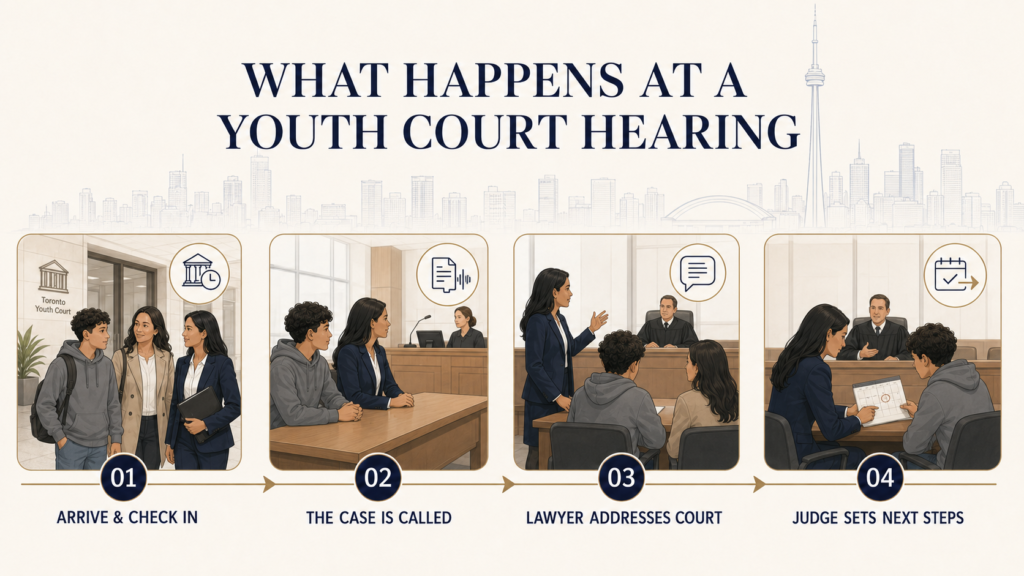
The first court appearance is usually not a trial. Witnesses are not normally called, and the judge does not usually decide guilt or innocence that day. The purpose is to start the court process, confirm the charge, address disclosure, and set the next step.
The young person must attend unless a lawyer confirms otherwise. A parent or guardian should usually attend as well. Bringing all paperwork is helpful, including release documents, appearance notices, undertakings, police forms, and any conditions already imposed.
At the hearing, the judge or justice may confirm the youth’s name, the charge, and whether the youth has a lawyer. The Crown may provide disclosure or indicate when it will be ready. Disclosure is the evidence the prosecution plans to rely on, such as police notes, witness statements, videos, photos, screenshots, 911 recordings, or other documents.
A lawyer may ask for an adjournment so disclosure can be reviewed. The case may be moved to another date for Crown discussions, a judicial pre-trial, a possible resolution, or trial scheduling. If release conditions are causing problems, the lawyer may also discuss whether a change can be requested.
A youth should not speak about the facts of the allegation in the courtroom hallway, by text message, on social media, or with anyone involved in the case. Even a short message to a complainant or witness can create new legal problems, especially if there is a no-contact order.
One helpful way to prepare for a youth court appearance is to focus on the basics:
- arrive early and dress respectfully
- bring every court and police document
- attend with a parent, guardian, or responsible adult where possible
- do not contact witnesses, complainants, or co-accused if conditions prohibit it
- speak with a lawyer before making admissions, apologies, or decisions about a plea
- follow all release conditions until a court changes them
Kahlon Law helps youth and families prepare before the hearing so they know where to go, what may happen, and what should be avoided.
Bail Hearings, Release Conditions, and Youth Custody
Sometimes a youth is released by police with conditions and a future court date. In other cases, police may hold the young person for a bail hearing. This can happen if there are concerns about safety, attendance in court, further offences, lack of supervision, or the seriousness of the allegation.
At a youth bail hearing, the court decides whether the young person should be released or remain in custody while the case continues. Detention is not supposed to be the default approach. The judge must consider whether there is a safe and workable release plan.
A release plan may include living with a parent or guardian, attending school, following a curfew, avoiding certain people or places, reporting to a supervisor, staying away from drugs or alcohol, or following house rules. The court may also want to know whether a responsible adult can supervise the youth.
Release conditions can shape daily life. A no-contact order may affect school, sports, work, or shared friend groups. A curfew may affect employment or family responsibilities. A condition to attend school may require coordination with school staff. If a condition is too broad or unrealistic, a defence lawyer can seek a change where appropriate.
If the young person is detained, the case becomes even more urgent. The lawyer may need to gather background information, speak with family members, prepare a new release plan, and address the court’s concerns. The goal is to show that the youth can be safely supervised outside custody while the case moves forward.
A custody sentence is different from pre-trial detention. Pre-trial detention happens before the case is decided. A custody sentence may be imposed only after a finding of guilt and only in more serious circumstances. Both situations require careful legal attention.
Pre-Trial Steps, Disclosure, and the Role of a Lawyer
After the first appearance, the case usually moves into the pre-trial stage. This is where the defence lawyer reviews disclosure, identifies legal issues, speaks with the Crown, and advises the family on the available paths.
The lawyer will look at whether the Crown can prove the charge, whether police respected the youth’s rights, whether any statement can be challenged, whether identification is reliable, whether witnesses are consistent, and whether the evidence supports the allegation.
A youth has the right to remain silent and the right to legal advice. This matters at every stage. Young people may feel pressure to explain themselves, apologize, or agree with adults in authority. A lawyer can help prevent decisions made out of fear or confusion.
Pre-trial discussions may lead to several possible outcomes. The Crown may agree to withdraw the charge, offer diversion, propose a peace bond, seek a guilty plea to a lesser offence, or continue toward trial. In some cases, the defence may request a judicial pre-trial so a judge can help narrow issues or give input on resolution.
The table below outlines common steps before a youth trial or resolution.
| Stage | What Usually Happens | Why It Matters |
|---|---|---|
| Disclosure review | The lawyer reviews police notes, statements, videos, and other evidence | Helps assess the strength of the case and possible defences |
| Crown discussion | Defence and Crown discuss the charge, evidence, and possible outcomes | May lead to withdrawal, diversion, resolution, or trial planning |
| Bail or condition review | Release terms are assessed for fairness and practicality | Can help reduce unnecessary disruption to school, work, and family life |
| Judicial pre-trial | A judge may discuss issues with counsel before trial | Helps narrow disputes and move the case forward |
| Trial preparation | Witnesses, evidence, legal arguments, and youth rights are reviewed | Prepares the defence if the charge is contested |
Kahlon Law’s role is to make the process clear and strategic. The firm works directly with families, explains legal choices in plain language, and prepares each case based on its specific facts.
Sentencing: Community Service, Probation, or Custody
If a youth is found guilty after trial or enters a guilty plea, the judge must decide on a sentence. Youth sentencing focuses on accountability, rehabilitation, reintegration, and proportionality. The sentence must reflect the offence, but it must also account for the young person’s circumstances.
Possible youth sentences include a reprimand, discharge, fine, restitution, community service, probation, counselling, program attendance, supervision, or custody in more serious cases. A probation officer may become involved to supervise conditions, prepare reports, or connect the youth with services.
Community service is a common option in youth court. It allows the young person to give back to the community while showing responsibility. It may be paired with probation, counselling, restitution, or school-related expectations.
Probation can include rules about school attendance, curfew, reporting, counselling, weapons, substances, contact with certain people, and staying away from specific places. Breaching probation can lead to further charges, so every condition must be understood clearly.
Custody is usually reserved for more serious matters, repeat offending, violent allegations, or cases where community-based options are not enough. Even where custody is imposed, the youth justice system still considers reintegration planning and support.
A youth record is another major concern. A youth record is not the same as an adult criminal record, but it can still be accessed by certain agencies during the access period. The outcome of the case can affect how long that record remains open and what future risks may arise.
Before any guilty plea, the family should understand the evidence, the possible sentence, and the record consequences. A fast resolution is not always the right one. The goal should be a result that is legally sound and protects the youth’s future wherever possible.
Speak with Kahlon Law before a Youth Court Hearing
A youth court hearing can affect far more than the next court date. It can affect release conditions, school routines, family stress, privacy, records, and the young person’s future opportunities. Families should not have to navigate that process alone.
Kahlon Law represents youth and families in Toronto and across the GTA. The firm provides direct lawyer access, clear advice, and defence strategies built around the facts of each case. Whether the matter involves a first appearance, bail hearing, pre-trial stage, trial, or sentencing, early legal guidance can help protect the young person’s rights.