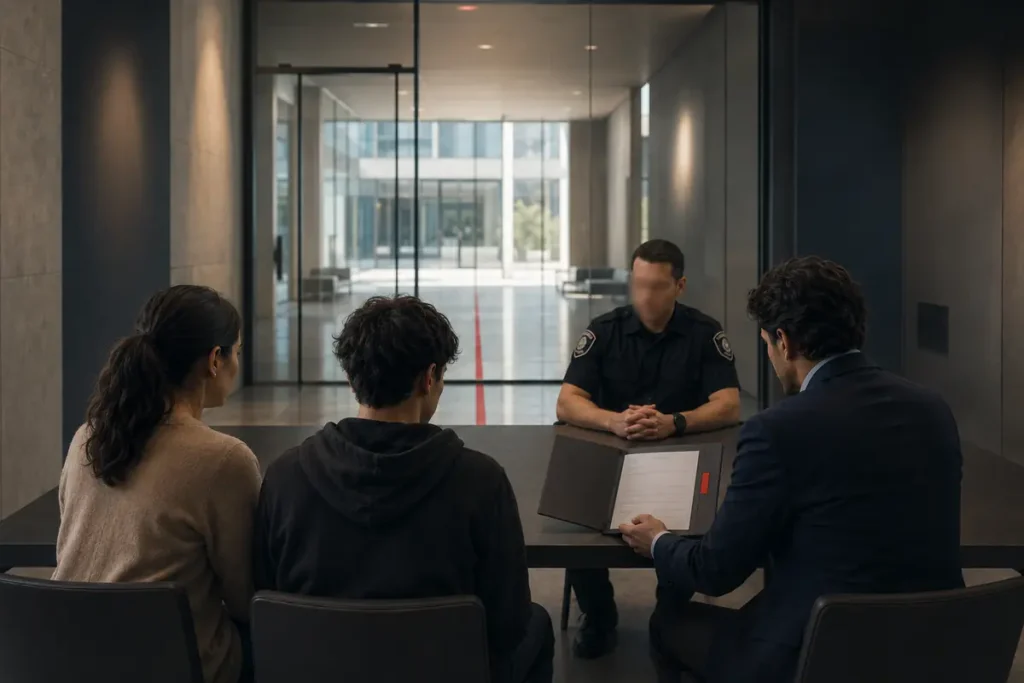

When a teenager is charged for the first time, the experience can be frightening for both the young person and their family. Parents may be unsure whether their child will be taken into custody, whether the matter will go to trial, what happens at the first court date, and whether a criminal record can affect school, work, travel, or future plans.
Youth court is different from adult court. In Canada, cases involving people who were at least 12 but under 18 at the time of the alleged offence are handled under the Youth Criminal Justice Act, often called the YCJA. The law recognizes that youth are still developing, so the court process balances accountability with rehabilitation, privacy, and reintegration.
For first time offenders, the outcome may depend on the charge, the evidence, the youth’s background, whether anyone was harmed, and whether the young person has support at home and in the community. Some cases can be resolved through diversion, restorative justice, community service, counselling, or other measures. Other cases require a strong defence and careful preparation for trial.
Kahlon Law represents youth and families in Toronto and across the GTA. The firm’s approach is direct and practical: protect the youth’s rights, review the evidence, explain each step about how youth court works for first time offenders, and build a defence strategy aimed at reducing long-term harm.
Why Youth Criminal Proceedings Are Different
Youth criminal proceedings are built around the idea that young people should be held responsible in a way that reflects their age, maturity, and ability to change. A first offence should not automatically define a teenager’s future. At the same time, the court still takes allegations seriously, especially where violence, weapons, threats, theft, drugs, breaches, or harm to another person are involved.
The YCJA gives the justice system tools that are different from those used in adult court. Privacy rules are stronger. A young person’s name is usually protected from publication. Youth records are treated differently from adult records. The court can consider family support, school involvement, counselling, community programs, and other steps that may help reduce the chance of further offending.
First-time youth offences may involve police warnings, cautions, referrals, extrajudicial sanctions, court appearances, bail conditions, or a formal sentence. The path depends on the facts. A minor allegation with strong family support may be handled differently than a serious allegation involving injury, planning, weapons, or repeated behaviour.
A lawyer’s role is to make sure the young person understands their rights and does not make avoidable mistakes. Youth have the right to remain silent and the right to speak with a lawyer. They should not answer police questions about the offence without legal advice. A statement made early in panic, confusion, or pressure can become evidence later.
Kahlon Law’s youth defence work focuses on early action. The sooner a lawyer is involved, the sooner the family can understand the charge, release conditions, disclosure, and possible options for resolving or fighting the case.
The Court Process from Arrest to First Appearance
The court process often begins with police contact. A youth may be arrested, given an appearance notice, or released to a parent or guardian with paperwork requiring attendance in court. In some cases, the young person may be held for a bail hearing, especially if police believe there are safety concerns, no suitable supervision plan, or a risk that the youth will not attend court.
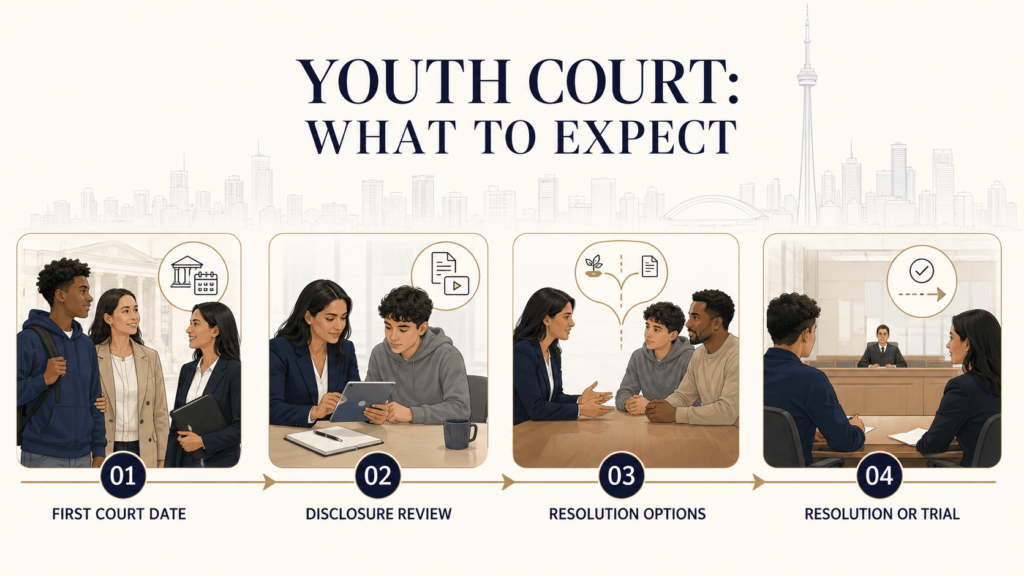
The first appearance is usually not a trial. It is often an administrative court date where the charge is confirmed, disclosure is discussed, and the next steps are scheduled. Disclosure is the evidence the Crown may rely on, such as police notes, witness statements, photos, videos, surveillance, text messages, or other records.
Families should treat the first appearance seriously. Missing court can lead to further charges or stricter conditions. A lawyer can attend with the youth, request disclosure, speak with the Crown, and explain what the court expects next.
Common steps in a first-time youth case include:
- police contact, arrest, release, or a summons to attend court
- first appearance and confirmation of the charge
- disclosure review by the defence lawyer
- Crown discussions about diversion, resolution, or trial
- possible meetings with a probation officer, counsellor, or community program
- judicial pre-trial or case conference, depending on the matter
- trial, guilty plea, withdrawal, diversion, or sentencing
Release conditions can affect daily life. A youth may be ordered to stay away from a person or place, avoid contact with a complainant or co-accused, follow a curfew, attend school, live at a certain address, or follow house rules. Some conditions are necessary. Others may be too broad or difficult to follow. If a condition interferes with school, work, family responsibilities, or counselling, a lawyer may be able to seek a change.
For parents, the most useful early steps are to keep all court paperwork, make sure the youth follows every condition, avoid direct contact with witnesses or complainants, and speak with a defence lawyer before making decisions about statements, apologies, or restitution.
Restorative Justice, Community Service, and Diversion Options
For many first time offenders, the most important question is whether the case can be handled without a trial or formal finding of guilt. The YCJA encourages police and prosecutors to consider alternatives where appropriate. These options are not available in every case, but they can be helpful when the allegation is less serious, the youth has limited or no prior history, and there is a realistic plan for accountability.
Restorative justice focuses on repairing harm. The young person may be asked to understand the effect of their actions, take responsibility where appropriate, apologize, pay restitution, complete community service, attend counselling, or participate in a structured program. The goal is not to excuse the behaviour. The goal is to address it in a way that reduces future risk and supports rehabilitation.
Community service is a common youth court outcome. It allows the young person to give back through approved work with a local organization or program. Judges and Crowns may see it as a practical way to show accountability, especially when paired with school attendance, counselling, or family supervision.
Diversion or extrajudicial sanctions may help a youth avoid a criminal record if all terms are completed. However, families should not assume that diversion is always the best choice. In some cases, the evidence may be weak, the allegation may be denied, or the proposed terms may require the youth to accept responsibility for something they did not do. A lawyer can review the evidence first and then advise whether diversion, negotiation, or trial is the better path.
| Possible Outcome | What It May Involve | When It May Be Considered |
|---|---|---|
| Warning or caution | Police address the behaviour without formal court proceedings | Less serious allegations with limited risk |
| Diversion or extrajudicial sanctions | Counselling, apology, restitution, community service, or programming | First offence matters where accountability can be handled outside trial |
| Peace bond or negotiated resolution | Conditions for a period of time, often without a finding of guilt | Cases where risk can be managed and the Crown agrees |
| Probation | Court-ordered supervision with terms the youth must follow | Where a formal sentence is required |
| Custody | Placement in a youth facility or supervised setting | Serious cases, repeat offending, or where community options are not enough |
Kahlon Law reviews whether alternatives are available and whether they truly serve the young person’s interests. The right path should protect the youth’s future, not simply move the case quickly.
Parents, Guardians, and the Role of Support at Home
Parents and guardians often play a major role in youth court. Their involvement can affect release plans, bail decisions, compliance with conditions, access to counselling, school stability, and the court’s understanding of the young person’s circumstances.
A judge may want to know whether the youth has structure at home, attends school, follows household rules, and has adults who can help them stay away from further trouble. A parent may be asked to supervise the youth or help make sure they attend court, comply with curfew, avoid prohibited contact, and complete any required programs.
Support at home does not mean ignoring the seriousness of the offence. It means helping the young person respond responsibly while protecting their legal rights. Parents should avoid pressuring the youth to confess, apologize, or message the complainant before speaking with counsel. Even a well-meaning apology can create legal problems if it is treated as an admission or a breach of a no-contact condition.
A strong support plan may include school attendance, counselling, part-time work, sports, mentoring, cultural or faith-based support, and clear household expectations. If the youth has mental health concerns, learning needs, substance use issues, or peer pressure problems, those issues should be addressed early and carefully documented where helpful.
The probation officer may also become involved, particularly after a finding of guilt or where the court needs background information. A probation officer can supervise conditions, prepare reports, and connect the youth with services. The defence lawyer’s role is to make sure the young person’s full circumstances are presented fairly, not reduced to the allegation alone.
Kahlon Law works with families to prepare for court, gather useful background information, and build a plan that shows the youth has support and direction.
Sentencing and Records for First Time Youth Offenders
If a youth is found guilty or enters a guilty plea, the judge must decide on a sentence. Youth sentencing is different from adult sentencing. The sentence should be proportionate to the offence, but it should also account for the young person’s age, maturity, needs, background, and prospects for rehabilitation.
Common youth sentences may include a reprimand, absolute or conditional discharge, fine, restitution, community service, probation, counselling, attendance at programs, supervision, or custody in serious cases. Custody is usually treated as a last resort and is more likely where the offence is serious, there is violence, there are prior findings, or community-based options are not enough.
A first offence does not guarantee a light result. The court will look at the details. For example, a first-time theft allegation may be treated very differently from a first-time robbery, assault causing bodily harm, weapons offence, or breach of release conditions.
Youth records are also a major concern. A youth record is not the same as an adult criminal record, but it can still matter. It may be accessible to certain agencies for a set period. The access period depends on the outcome and whether the youth is later charged or found guilty of another offence. If a young person receives an adult conviction while a youth record remains open, the consequences can become more serious.
This is why legal advice before any plea is so important. A lawyer can explain the record consequences, available sentencing options, and whether the Crown can prove the case. In some matters, the defence may be able to seek withdrawal, diversion, reduced charges, or a sentence that limits future damage.
Kahlon Law builds defence strategies around both the immediate court result and the long-term impact on the youth’s education, employment, travel, and personal development.
Speak with Kahlon Law about a First-Time Youth Court Case
A first time charge can feel like a turning point, but it does not have to control a young person’s future. The outcome often depends on the steps taken early: getting legal advice, protecting the right to silence, following release conditions, reviewing disclosure, and presenting the youth’s circumstances clearly.
Kahlon Law provides youth criminal defence representation in Toronto and across the GTA. The firm is familiar with local courts, Crown practices, youth offences, bail concerns, and the importance of direct lawyer access. Families work with a defence lawyer who can explain the process, answer questions, and prepare a strategy based on the specific facts of the case.
If your child has been arrested, charged, released on conditions, or given a first appearance date, contact Kahlon Law for a confidential consultation. Early legal guidance can help protect your child’s rights, reduce stress, and create a clear plan for the next court date.