- Practice Areas
Explore Our Practice Areas
Delve into detailed case studies across a variety of legal practice areas, showcasing our strategic defense and successful outcomes.


Delve into detailed case studies across a variety of legal practice areas, showcasing our strategic defense and successful outcomes.
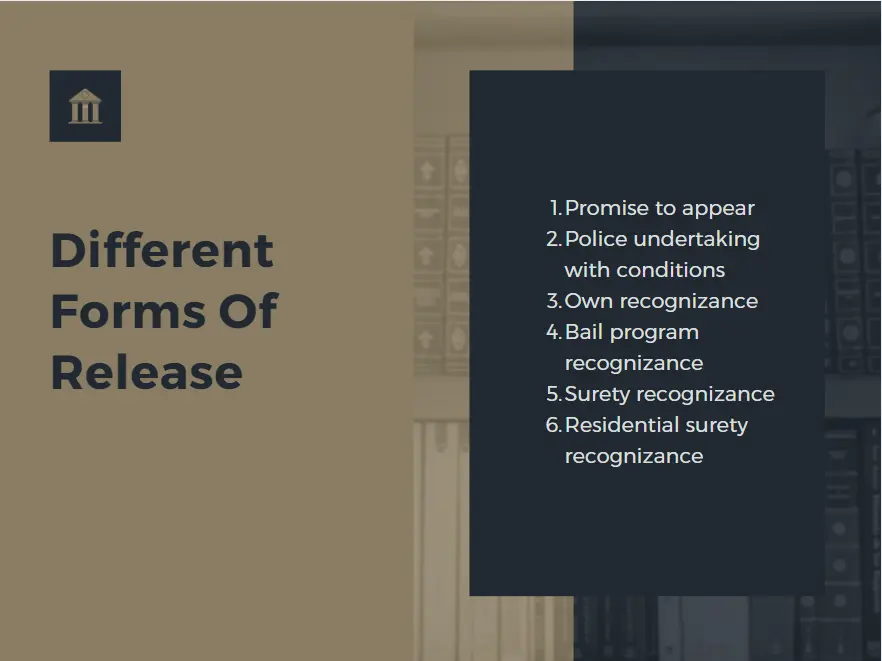
There are several ways an accused person can be released pending the outcome of a criminal charge. A police officer can release you directly from the station with a Promise to Appear or an Undertaking, which includes specific conditions you must follow. Your release papers will state your first court date and a date for fingerprinting.
You do not have to agree to the conditions proposed by the police. However, refusing them will result in you being held for a bail hearing. Since release conditions can last until your trial concludes, it’s important to consult with a defence lawyer before agreeing to them.
Police consider several factors when deciding whether to release an accused person or hold them for a court appearance. These factors include:
The seriousness of the charge
Any prior criminal record
Whether the person is already on another form of release
If police believe an accused person should not be released, they will be held for a bail hearing, which typically happens within 24 hours of the arrest. This is a common procedure, especially in cases involving domestic violence allegations.
Here is the revised text, organized for clarity and readability.
Police consider several factors when deciding whether to release an accused person or hold them for a court appearance. These factors include:
The seriousness of the charge
Any prior criminal record
Whether the person is already on another form of release
If police believe an accused person should not be released, they will be held for a bail hearing, which typically happens within 24 hours of the arrest. This is a common procedure, especially in cases involving domestic violence allegations.
A bail hearing is a formal court proceeding to decide if a person should be released from custody while their case is ongoing. The Crown attorney may consent to the release. If they oppose it, the matter proceeds to a contested bail hearing. If release is granted, the court will impose conditions, such as a curfew, travel restrictions, or no-contact orders.
The bail hearing is one of the most critical stages of a criminal case. A poorly presented plan can lead to serious consequences, including being denied bail and held in custody until trial. A defence lawyer can assess the strength of the Crown’s case, help you create a strong and reasonable release plan, and guide you through the complex court process. If you or someone you know has been arrested, contacting a criminal lawyer at the earliest opportunity is crucial.
We’ve Got the Answers. Call us now and speak directly with a lawyer.
Often, the burden is on the Crown counsel to show cause as to why an accused person should not be released on bail. In certain circumstances, the onus is reversed (reverse onus), and the accused must show why they should not be detained pending trial. At the bail stage, the Crown prosecutor will advise the court of the grounds on which they are seeking the detention of the accused person. The three grounds are enumerated in the Criminal Code: the Primary Ground, Secondary Ground, and Tertiary Ground. The Crown counsel can seek detention on one or a combination of these grounds.
The Primary Ground seeks to detain an accused person on the basis that they are a flight risk. This may be due to a lack of ties to the jurisdiction, limited financial resources, or a criminal record involving failures to attend court.
The Secondary Ground seeks to detain an accused person on the basis that there is a substantial likelihood they will commit another criminal offence if released on bail. The Supreme Court of Canada has outlined three things that must be established at bail hearings.
The Tertiary Ground involves assessing:
The apparent strength of the prosecution’s case;
The gravity of the offence;
The circumstances of the commission of the offence, including whether a firearm was used; and
The fact that the accused is liable, on conviction, to a lengthy term of imprisonment.
When police lay a criminal charge, they may arrest the accused to ensure they will attend court and to prevent any further offenses. Upon arrest, an accused person’s constitutional rights remain fully protected.
Specifically, Section 11(e) of the Canadian Charter of Rights and Freedoms guarantees that any person charged with an offence has the right not to be denied reasonable bail without just cause. Pre-trial detention is meant to be the exception, not the rule, in our justice system. A criminal defence lawyer’s first priority is to secure their client’s release as quickly as possible, allowing them to continue their daily life while the case proceeds.
Bail hearings are time-sensitive, and the criminal process can be very confusing to navigate on your own. To get the best possible result, it’s crucial to hire a lawyer from the start.
A defence lawyer can make the bail process much smoother and faster and can make all the difference in securing your release from custody. Your counsel will:
Review the allegations and your criminal record to formulate a strategic bail plan.
Use this plan to negotiate a potential consent release with the Crown attorney.
Interview and prepare your sureties to provide effective evidence at the hearing.
If you are unable to afford a lawyer, duty counsel are available in all bail courts to assist you free of charge. After your release, you can also contact Legal Aid Ontario to apply for a certificate to cover legal fees. If you or someone you know has been arrested, it is important to seek legal assistance as soon as possible.
A proposed surety is someone who takes responsibility for supervising an accused person while they are on bail. The surety pledges a sum of money to the court, risking the loss of some or all of it if the accused fails to comply with their release conditions. Typically, this money is not paid upfront.The responsibilities of a surety include ensuring the accused attends court as required and abides by all bail conditions, and reporting any violations to the police.
At a bail hearing, proposed sureties testify about their qualifications, background, and suitability. It is critical for a lawyer to prepare proposed sureties for this process, as they will be subject to cross-examination by the Crown attorney. After hearing from the sureties, the presiding justice determines whether to release or detain the accused and under what conditions. A lawyer will advocate for the accused’s release on the least onerous conditions possible.
The Supreme Court of Canada, in R v Antic [2017 SCC 27], clarified that every less restrictive form of release must be considered before imposing a more restrictive one.
If bail is denied at the initial hearing, a bail review application can be brought to the Superior Court to have the detention order reviewed. An application can be made if the circumstances of the case have changed materially or if the bail hearing justice made an error in law. The firm has a record of getting accused persons out of prolonged and unjustified police custody. The firm has extensive experience in bail courts for various charges, including manslaughter, firearm offences, domestic assaults, drug offences, and many others. If you or someone you know has been arrested or is surrendering to the police, give a defence lawyer a call or contact us for a consultation.
We’ve Got the Answers. Call us now and speak directly with a lawyer.
Our Locations:

